GEM

Giza

GEM

The Grand Egyptian Museum

When technology fades away to make way for myth

Just over a mile from the Pyramids of Giza, the Grand Egyptian Museum brings together in a single location over 100,000 artefacts from Egyptian civilisation: the largest collection ever dedicated to a single culture. It took twenty years of work and an international competition to build it. But the principle guiding every room in the museum, from the entrance hall to Tutankhamun’s treasure, is simple: the light must never draw more attention to itself than the artefact it illuminates. 

The museum officially opened on 1 November 2025, on the Giza Plateau. Designed by the Irish firm Heneghan Peng Architects, winners in 2003 of what was the largest international architectural competition ever organised by the Egyptian Ministry of Culture, the GEM is a sequence of experiences unfolding from the entrance to the deepest galleries, built around light, time and perception. 

The overall lighting design was carried out by the Austrian firm Bartenbach, a pioneer in research into natural and artificial light, s responsible for the lighting design of the key spaces and the entire engineering review, carried out by Bonadei & Grassia VanCram on behalf of Acciona Cultura, under the lighting management of Pierluigi Grassia

The result is a dramatic play of light in which variations in intensity and the geometry of the light beams silently guide the visitor, without ever being intrusive. The light serves the artefact, not itself. 

A widespread presence, not a one-off initiative

DGA’s contribution to the GEM is not confined to a single space. DGA luminaires guide visitors through three of the most significant sections of the museum itinerary: the Tutankhamun Gallery with its“Membrana Walls”, the Grand Staircase linking the atrium to the main galleries, andthe Entrance Hall, where the colossal statue of Ramses II welcomes visitors. 

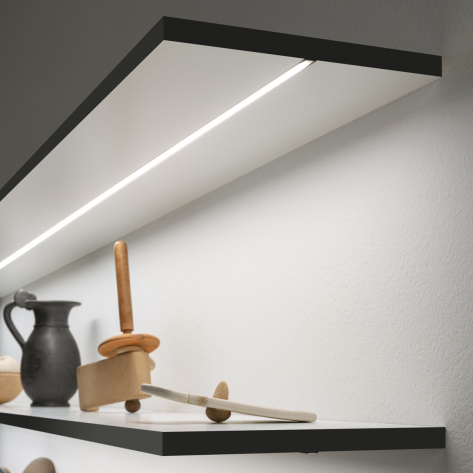
In these areas, every element of the exhibition design — furniture and graphic displays — is illuminated by Cometa Q8 IP67 luminaires, which provide the most technically sophisticated concealed lighting solutions. This is not general lighting, but a series of targeted installations that work in harmony with natural and architectural light, highlighting the position of the graphic elements that guide visitors along the Grand Stair and enhancing the viewing experience of individual objects without altering the overall balance of the scene.

The membrane walls and the Tutankhamun Hall

From a lighting perspective, the GEM’s most delicate challenge is the Tutankhamun Treasure Chamber: over five thousand objects – the entire collection recovered from the tomb – brought together for the first time in history in a single location. The lighting in the galleries is deliberately kept low for conservation reasons — to protect the gold leaf and painted wood from UV damage — which makes the task of restoring depth and emotion to the exhibits all the more delicate. 

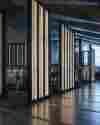
It is within this balance between emotion and conservation that the so-called‘Membrana Walls’come into play: surfaces that form the exhibition envelope of the galleries, designed to distribute light in a uniform and controlled manner, integrating it into the architecture without the light source ever being visible as such. These are actual doors, 6.5 metres high and 70 centimetres wide, placed side by side to form a square that encloses the exhibition space. The Membrana Walls are situated in two distinct areas: the one housing Tutankhamun’s grave goods — where the Mask Chamber is located — and the one where the artefacts discovered in the tomb are displayed. 

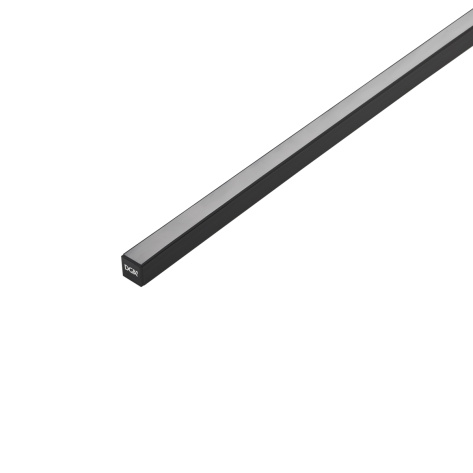
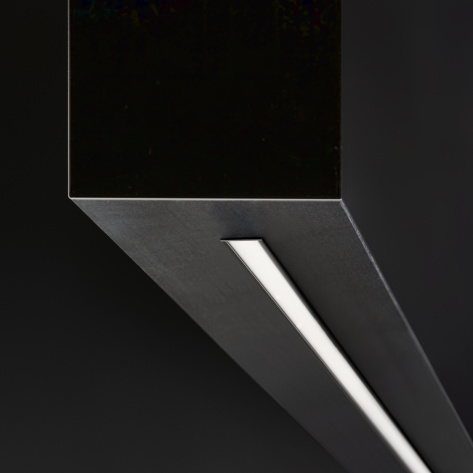
Within the metal framework of these walls, DGA has supplied Cometa Q8 linear luminaires. The luminaires, positioned at the sides and completely concealed, lend themselves particularly well to integration into architectural systems featuring indirect or diffused lighting. 

The Cometa Q8 luminaires have performed exactly as good lighting fixtures should: by disappearing. Visitors to the Tutankhamun chamber do not notice the light sources. They notice the glow on the gold of the funeral mask, the depth of the carvings on the sarcophagus, and the way the jewellery seems to hold the light rather than reflect it. 

The Entrance Hall and the statue of Ramses II

Visitors entering the GEM are greeted by the colossal statue of Ramses II, eleven metres tall and weighing approximately 83 tonnes of pink granite. In the entrance hall, the statue is bathed in natural light for most of the day, which filters down from above and is reflected in a pool of water at its feet. It is in this setting, dominated by architectural lighting, that the DGA luminaires come into their own: the Cometa Q8 IP67s illuminate and frame the space’s design elements — furniture, display cases, graphic elements — precisely highlighting what the natural light leaves in shadow. 

The Grand Stair, the Pharaohs’ Staircase 

From the atrium, a monumental six-tiered staircase leads to the museum’s main galleries, lined with statues of pharaohs, queens and deities. The route ends in front of a large glass window framing the view of the Pyramids of Giza. Throughout the entire route, DGA’s Cometa IP67 luminaires illuminate the display cases and graphic elements accompanying the sculptures, ensuring continuity with the lighting design adopted in other areas of the museum: a light that accompanies without ever overpowering. 

Grand Egyptian Museum — Giza, Egypt 

Architecture: Heneghan Peng Architects 

General lighting design: Bartenbach Lighting Design 

Lighting management & engineering: Pierluigi Grassia (B&GVanCram) for Acciona Cultura 

DGA products: Cometa Q8 IP67, Cometa Q8 

Photo credit: ATELIER BRÜCKNER GMBH / Photos by Josef Sindelka & Rehab Eldalil

Products used in the project

You might also be interested in

All realisations

The "Favorites" feature is only available to registered and authenticated users.
Log in to your personal area or complete your registration to save and manage the products you are interested in.

Warning: you are browsing the area dedicated to UL certified products, compliant with the regulations required for the US and Canadian markets.