Focus Miniaturisation
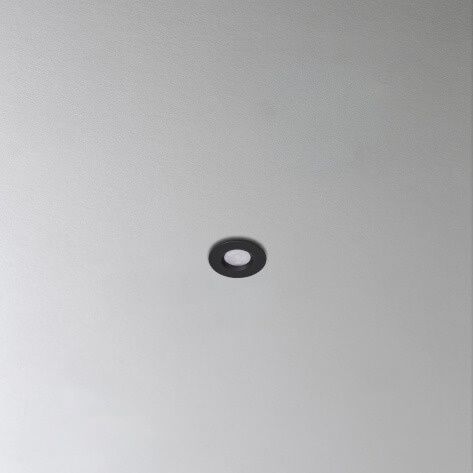
13.5 millimetres. That is the diameter of a recessed luminaire – the space within which every component, every detail and every performance characteristic must be designed.
At DGA, miniaturisation stems from challenges such as this: concentrating technology and light quality into ever-smaller dimensions, without compromising on performance. The result is a range of extremely compact solutions, designed with millimetre precision: from the smallest recessed fitting to the slimmest linear profile.
Miniaturisation means rethinking the relationship between the luminaire, light and architecture. Reducing the dimensions allows the luminaire to blend into the space more discreetly, allowing what really matters to come to the fore: the light and its effect on the environment.

For DGA, reducing size does not mean simplifying. It means preserving precision, quality and design freedom even when the available space is limited. This involves research into proportions, components and performance to create luminaires that blend into the architecture to the point of almost disappearing.
Less visual presence, greater freedom in designing light.
Behind these minimal dimensions lies work of the utmost precision. DGA’s miniaturised solutions are the result of manufacturing processes carried out using numerically controlled machines, capable of operating within minimal tolerances. This direct control makes it possible to reduce dimensions without compromising on performance or visual comfort.
The same research applies to optics. In-house designed nano-optics allow light to be controlled with precision, even in the smallest formats. This is the case with Nano Tini’s patented 5 mm nano-lenses, available in three beam angles (20°, 30° and 50°).
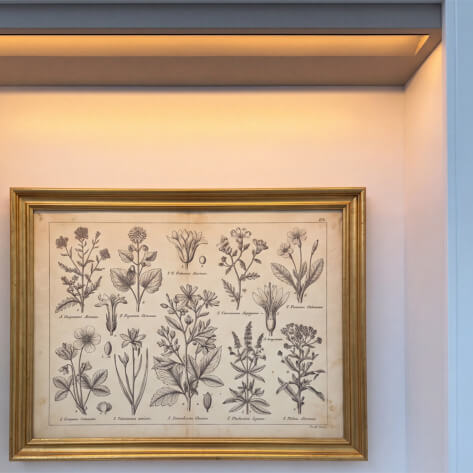
A few millimetres thus become a design space, capable of providing precise lighting for shop windows, retail spaces and museum environments, where control over every detail contributes to the perception of space.

Every DGA luminaire is the result of a balance between form, function and the quality of light. Miniaturisation means that this approach reduces only what can be reduced: the physical dimensions, not the attention to detail.
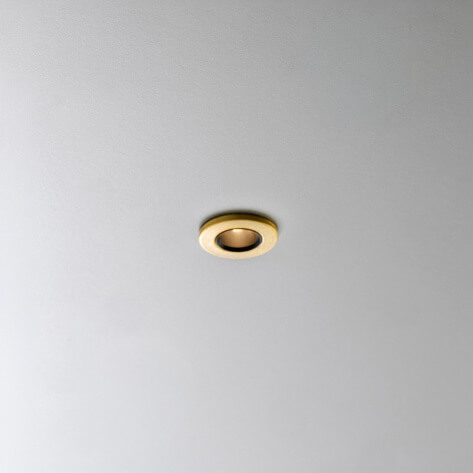
Some designs conceal the light source, allowing only its effect to be perceived; others transform minimal dimensions into a distinctive design feature. In both cases, the materials, mechanics, optics and finishes are designed with the same attention to detail as that given to larger luminaires.
Because reducing the scale does not mean reducing the attention to detail.
Miniaturisation in DGA spans a range of types and applications, resulting in a bespoke solution for each project.
In recessed fittings, Nano Tini i packs technology and light into a diameter of just 13.5 mm, fitting even into shelves and recesses as narrow as 15 mm. The Gemma range, meanwhile, continues to evolve whilst remaining true to its minimalist and rigorous design language.
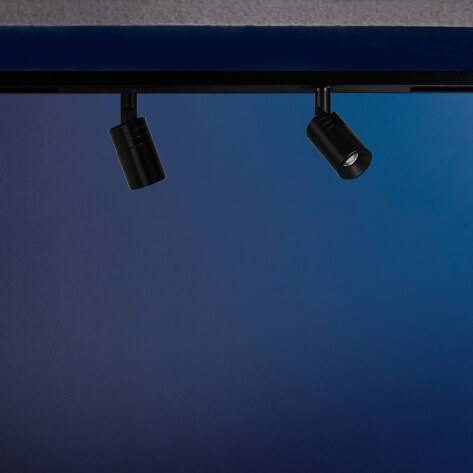
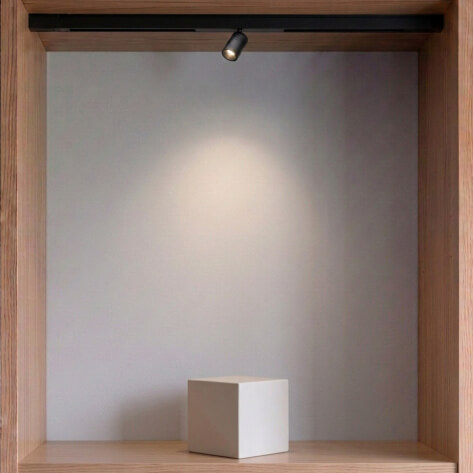
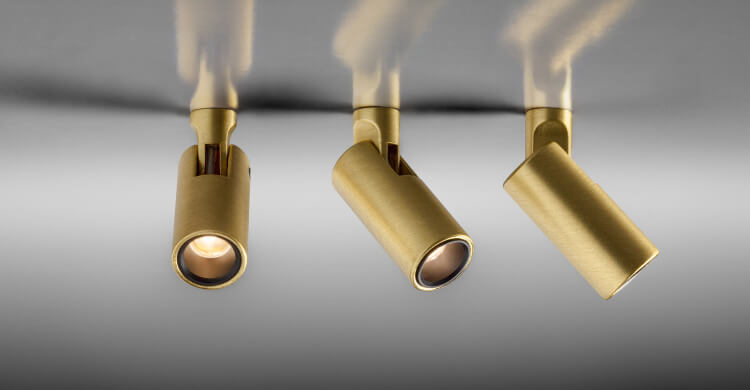
In track spotlights, the Mini Tini B – available for Micro or Multi tracks – incorporates four different optics within an extremely compact body, offering design flexibility on a small scale.
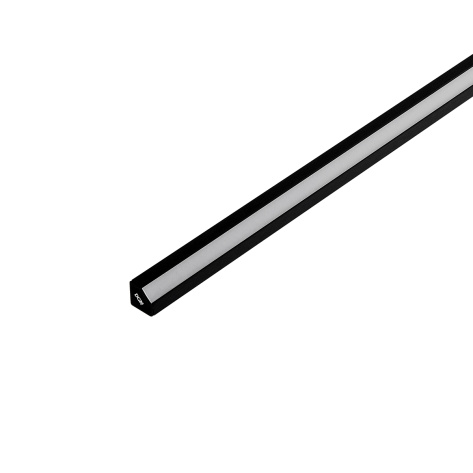
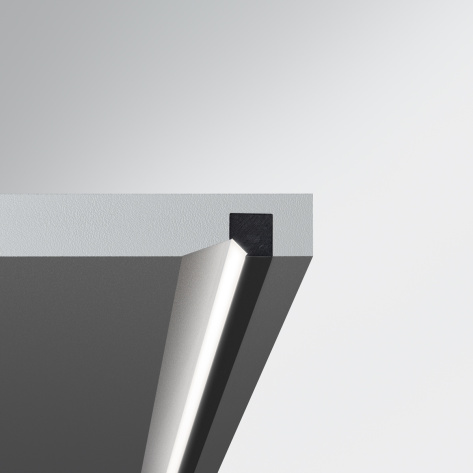
In linear profiles, innovation is literally measured in millimetres: Cometa Q4 reduces the thickness to just 4.5 mm, whilst Cometa Q8 concentrates its lighting performance into a profile of just 8 mm. With Q8 Lenti, the in-house designed nano-lenses also enable a precise and controlled beam.
Outdoors, too, the principle remains the same. Spillo brings a subtle presence to terraces and gardens, with adjustable heights and angles; Milli, designed for the most exposed environments, combines compact dimensions with visual comfort.
Recessed fittings, spotlights, profiles, outdoor lighting: different scales and applications, yet the same pursuit of the essential.
Explore the collection of miniaturised luminaires.